

The Ruru Reunion
J19: Vannes @ Oyonnax

It would take two days of travel to get from Napier, New Zealand to Oyonnax, France.
But despite the distance, there are some similarities.
They are both near famous vineyards, Bugey and Hawke’s Bay. They both sit at the foot of mountains, the Jura and Te Mata Peak. And, crucially, both regions are obsessed with rugby.
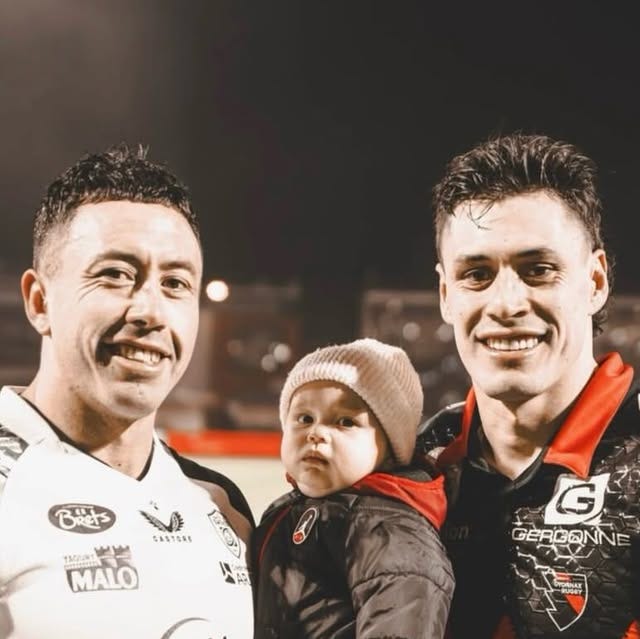
And it’s the latter that connects the two on Thursday night, when it brought the Ruru brothers together, 20,000 km from their hometown.
Michael and Jonathan grew up in Hawke’s Bay, on New Zealand’s east coast, and started their professional careers at the region’s eponymous rugby club.
From there, they spent several years bouncing around the Antipodes as journeymen. The last time they faced each other was in Super Rugby in 2017, when Michael was with the Melbourne Rebels and Jonathan with the Auckland Blues.
Though the two of them have been in France for more than five years, injuries meant that Thursday night was the first time the scrum-halves had met in almost a decade. And it promised to be a close battle at the base of the ruck.
Michael is probably the in-form player in the entire league. He leads Vannes in scoring and successful jackals, setting the tone defensively and offensively for the best team in the Pro D2.
But Jonathan is no slouch, and Oyonnax are having a decent season too. Despite a comfortable loss against RCV in the first round, they’ve since put together some strong results and are lurking in fifth, threatening the top four.
If there’s one thing that can help a team take the next step, it’s sibling rivalry. Though I’m sure there’s filial pride, the chance to put in a strong performance in primetime against your older brother is too big an opportunity to ignore.
Underneath a heavy layer of fog, the game kicked off at Stade Charles-Mathon.
It was Oyonnax who first shone a light through the gloom. Utilising the lack of visibility, they played a pragmatic set of sequences to start the half.
This meant box kick after box kick after box kick. The Vannes back three were tested early, and once they were sufficiently drawn in, Jonathan Ruru shot a quick 50-22 grubber from the base to gain some early territory. Vannes’ lineout, missing Dave Cherry due to his Six Nations selection, went awry, and Oyonnax forced their way over the line from the steal.
Les Oyomen weren’t done, and neither was the younger Ruru. Picking blind, Jonathan drifted towards touch and threw a subtle inside ball out the back of his hand. Though impressive, poor defence from the visitors made the break look a lot better, with Karim Qadiri gaining far too much ground through far too many missed tackles.
The pressure led to five points, and Vannes faced a two-try deficit after ten minutes. The only thing helping them was that Justin Bouraux missed a conversion and a penalty. To be fair to the young fly-half, the posts were barely visible from 20 metres, that’s how bad the brouillard had become.
Vannes finally broke free of their Sisyphean game when Camou found a seam and bounced off several tackles for a big break into Oyonnax territory. From the quick ball, Maxime Lafage picked out Robin Taccola with a miss-pass. Taccola, usually a centre, timed his run perfectly and finished with his usual speed and power.
But the boulder had rolled back down the hill. Oyonnax got the ball and went back to the box-kick. Up, under, and unsettling Vannes’ rhythm, forcing them to retreat and scrabble for territory. It paid off. They earned a penalty and another three points, and Taccola was sent to the bin for ten. At half-time the score was 15–8 to the home side.

After the break, the visitors adjusted to the expected game plan. Near the hour mark, Michael Ruru pulled a classic older-brother move, using his experience to his advantage. When a defender was caught on the wrong side, the scrum-half stuck to him like a limpet from a Hawke’s Bay rockpool, winning a penalty inside the 22.
From the ensuing lineout it fell to him again. Pressing forward with both hands on the ball, he threw a dummy, coasted through a tackle, and then crashed his way over the line. In the space of five minutes showing the grace, physicality and nous that has made him the best player in the Pro D2 this season. With the conversion Vannes had a lead for the first time all game with 20 minutes to go.
But they were still a man down, and not long after Oyonnax took advantage of the chaos of playing against quatorze. Poor coverage from the visitors invited the counter-attack, Enzo Rebierre making 40 metres on his own. A burst of aggressive phase play against a dog-legged Vannes defence followed, and Oyonnax broke through for a try to retake the lead.
Frustratingly for the home fans, they didn’t take full advantage of the imbalance caused by Taccola’s ill-discipline. Sticking rigidly to their kicking tactic, they allowed Vannes to structure themselves around it. After a few substitutions, the older Ruru giving way to Mikhail Alania, the visitors began to win penalties, build some consistency, and push forward metre by metre. They finished with a classic Vannes try from a lineout and maul.
Now the sole Ruru representative on the pitch, Jonathan made his presence felt. An opportunistic moment from the New Zealander saw him pounce on a spilled Vannes ball. He darted from the base, surged upfield, and then put Rebierre through past the full-back to score in the corner.
Three lead changes in just ten minutes. And with five minutes to go, this was the biggest late-game test Vannes had faced all season. They had usually broken the back of the opposition with these comebacks by now, but Les Noir et Rouge, undefeated in eight matches at home, were proving far more resilient.
They needed someone to rise to the occasion. So, they brought Michael Ruru back on, this time taking his place out on the wing instead.
Inevitably, Vannes strung together phases and won a few penalties. From an attacking lineout they began to batter their way towards the line as the clock ran down. They tapped and went at each ensuing whistle, struggling to break through Oyonnax’s defence. With every carry, Ruru drifted in from his wing, until he eventually found himself over the ruck, pushing Alania into a spectator role. Perhaps accepting his unofficial status as a ninth forward, he slotted into the forwards’ pattern, picked and went over the line, and scored to retake the lead as the final whistle blew.
The referee didn’t go to the TMO, prompting immediate protests from the Oyonnax players, coaches, and, naturally, the fans. The boos were so thick it felt as though they added another layer to the fog in the stadium. Vannes had won, 32-29.
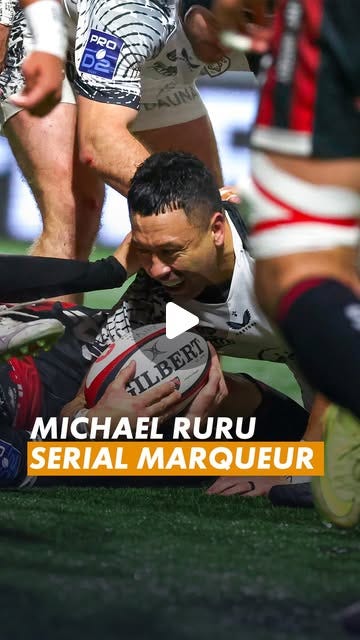
I’m running out of superlatives to describe Ruru’s performances. So, to quote Jean-Noël Spitzer instead: “Mike Ruru did what Mike does best, although I think he can bring more energy to the team when they are struggling in his body language, he needs to encourage his forwards more.”
There may not be a player more important to any side than Ruru is to this Vannes team, stacked with stars and sitting top of the table on 75 points.
Oyonnax will be disappointed, and Fabien Cibray didn’t directly blame the referee: “We were playing a high-level match against the Pro D2 leaders, and at the highest level, indiscipline is unacceptable… In the first half, we conceded two penalties, they nine, and we were leading at halftime. In the second half, the trend completely reversed with nine penalties awarded against us.”
Penalties aside, the truth is they failed to adapt their game plan, while Vannes have become masters of adaptation. Blue chameleons that change colour when it matters most.
They find ways to win. Sometimes it’s through systematic dominance at the set piece, sometimes it’s through a defensive jackal, like Djehi last week, and sometimes it’s the superstars. As Spitzer said, tongue firmly in his cheek, Ruru’s return was down to his own “coach’s instinct”.
Ruru willed that win through individual effort. When given the chance to speak about his performance the man of the moment was more direct:
“We shouldn’t wait until the final minutes to win. We’re under too much pressure and penalised too often in the first half. We need to work to correct that.”
The team has already followed his lead through his play. They probably should listen to his words too.
With a two-week break and two last-minute wins, there’s a lot to focus and practice on in the next fortnight, so that the next game is settled a little earlier than the 80th minute.